Tectonic Demos at Google I/O
By Ed Rooth, May 28, 2015
Originally published on the CoreOS blog (archived copy) . Re-published with the authors' permission.
Here at CoreOS we take great inspiration from Google. After all, our mission with Tectonic is to provide Google-like infrastructure to everyone else. Google got where it is today, partly because of the distributed systems architecture they have in place.
Because of this, we can't wait to attend Google I/O over the next couple of days and show you Tectonic first-hand. We'll be talking all about it on Friday, May 29th, at Booth A from 12-1 pm. In the meantime, read on below to see the different ways in which we are inspired by Google in our efforts to deliver this infrastructure to you.
Containers
Virtually everything at Google runs in a container, and containers are central to our efforts at CoreOS as well. We were the first to develop a thin, container-focused OS. In December we announced the App Container (appc) specification to help the industry collaborate on a container standard that has security and cross platform portability in mind. rkt, our container runtime, was the first implementation of the appc spec, but we have already seen others emerge such as Kurma and Jetpack.
Kubernetes
A central component of Tectonic is Kubernetes, an open source orchestration system originated by Google. Kubernetes is inspired by Borg, Google's internal highly-scalable container cluster management system. Google has some of the best experience in running containers, which is why we use Kubernetes as a key part of our Tectonic platform. Kubernetes also relies on etcd, a distributed key-value database developed at CoreOS.
AngularJS
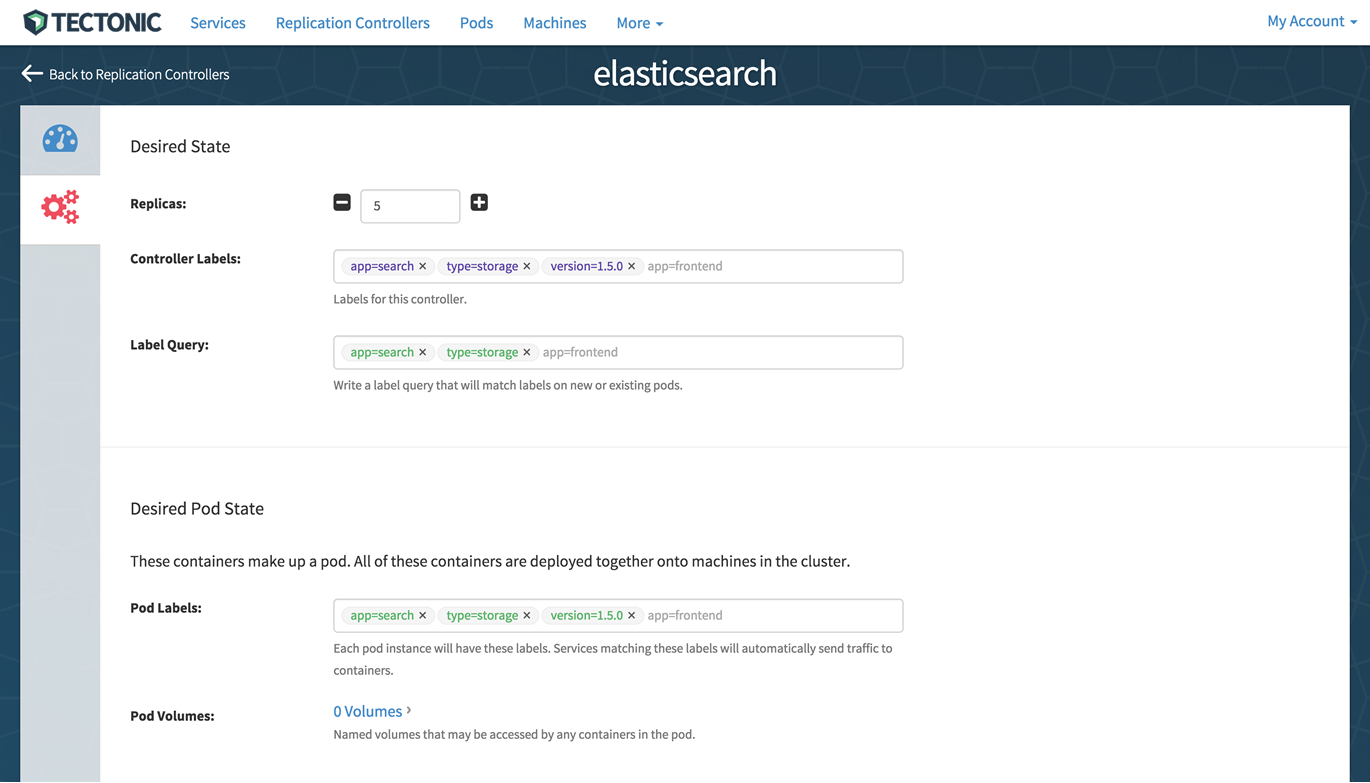
The Tectonic Console is a web front-end built using Google's AngularJS JavaScript framework. AngularJS is well suited for developing highly dynamic applications like the Tectonic Console, and the framework itself is developed with the same open source philosophy that CoreOS brings to many of our projects.
Omaha Protocol
CoreOS Linux uses the same automatic update protocol for servers that Google Chrome uses for browsers: the Omaha Protocol. We believe this approach to providing automatic software updates and patches is the best way to secure modern infrastructure.
These are just a few ways we are inspired by Google and how we hope to help other companies take advantage of container-based infrastructure and get their applications to market faster.
If you are interested in working on the Tectonic Console and bringing Google-like Infrastructure to everyone else, we are hiring front-end engineers. Check out our careers page.